
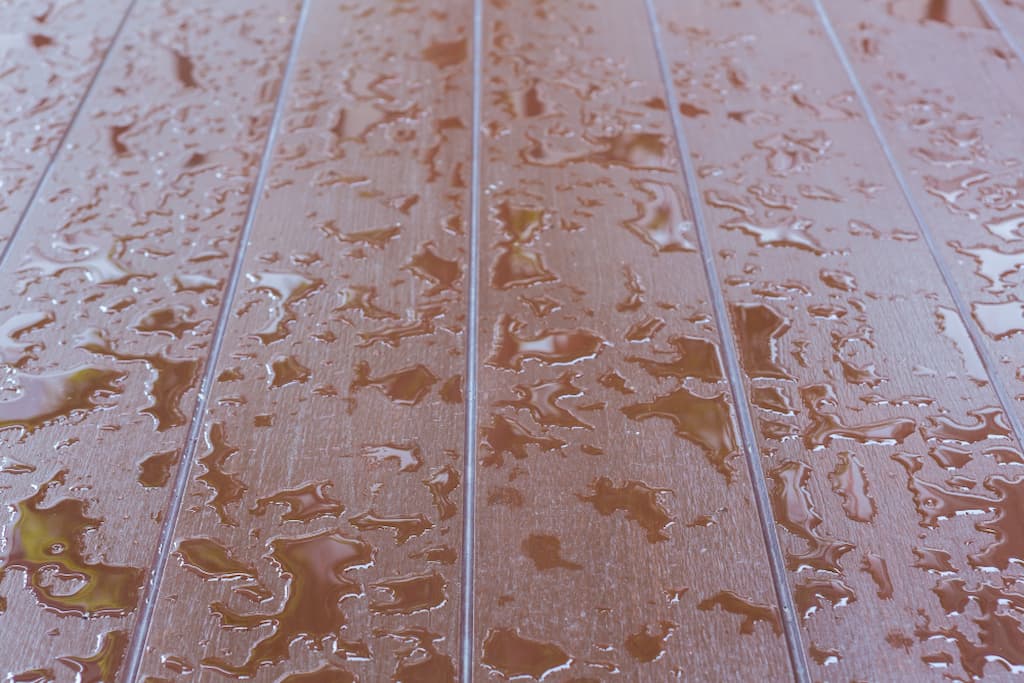
Short answer: for a damp house, the safest floor is vinyl, because the material does not absorb water. Porcelain tiles also cope with moisture, although they are colder and installing them does involve building work. If you want the look and feel of wood, go for a water-resistant laminate laid over an underlay with a damp-proof barrier. But before choosing a floor you need to know where the damp is coming from: no floor will fix damp rising from the slab or a leak.
First: where is the damp coming from?
| Type of damp | How to recognise it | What to do before laying the floor |
|---|---|---|
| Damp from the subfloor (rising damp) | Ground floors and houses with no void under the slab; stains or salt deposits at the bottom of the walls | Measure it and damp-proof if necessary; always lay a damp-proof barrier under the floor |
| Humidity in the air | Houses near the sea or with poor ventilation; condensation on windows, a musty smell | Ventilate, use a dehumidifier and choose a stable floor |
| Occasional water | Kitchens, bathrooms, utility rooms, entrances from the pool or garden | Choose a water-resistant floor for those rooms |
| Leak | Localised damp that doesn't dry out or keeps coming back | Fix the leak; the floor comes afterwards |
On our site visits we measure the moisture and the levelness of the floor before quoting. The subfloor has to be level, clean and dry for any floating floor.
The best floors for a damp house
1. Vinyl flooring: the most water-resistant
Vinyl is made of PVC: it doesn't absorb water, doesn't swell and can be mopped in any room, including bathrooms and kitchens. It is installed without building work over the existing floor, as click planks, glue-down tiles or rolls. The only thing to avoid is water sitting underneath it for days, for example under the skirting board.
It is the material we installed in settings as demanding in terms of cleaning as the extension of the Axarquía Hospital, with Tarkett and Gerflor PVC flooring.
2. Porcelain tiles: waterproof, but cold and requiring building work
Porcelain tiles absorb practically no water and are very durable. Their drawbacks are that they are cold to the touch and that switching to porcelain means building work: taking up the floor or raising the level, with rubble and more days on site.
3. Water-resistant laminate
If you want the look and feel of wood, there are laminates with a treated core and joints that can withstand spills for a certain time, as specified by each manufacturer. They are not waterproof like vinyl, so they are not the best option in bathrooms with a shower or in areas where water pools. Always lay them over an underlay with a damp-proof barrier.
4. Wood floorboards: engineered rather than solid
Natural wood moves with humidity. If you want wood in a damp house, engineered (multi-layer) floorboards are more stable than solid wood, and they need to be installed with a damp-proof barrier, an expansion gap and controlled humidity levels.
Floors to avoid in damp conditions
- Laminate without water resistance in kitchens, bathrooms or ground floors: if water gets in through the joints, the plank swells and almost never returns to its original shape (see water-damaged floating floors).
- Glued-down solid parquet on a damp screed: it swells, lifts or bulges.
- Carpet in damp areas: it holds moisture and encourages mould and dust mites.
What about a house by the sea?
On the Costa del Sol, humidity is high for much of the year. In kitchens, bathrooms and homes by the sea we recommend vinyl floorboards, which are water-resistant, or moisture-resistant laminate floorboards depending on the model. In the rest of the home, any floating floor works well if it has a damp-proof barrier underneath and an expansion gap around the edges.
How to protect the floor in a damp house
- Air the house every day and use a dehumidifier if the humidity stays high.
- Lay a damp-proof barrier under any floating floor installed over concrete or tiles.
- Wipe up spills straight away and mop with a well wrung-out mop.
- Check the joints in the kitchen and bathroom from time to time: a small leak under the floor can take a while to show.
Frequently asked questions
What floor should I lay on a damp ground floor?
First, check whether the damp is rising from the subfloor and fix it. Then go for vinyl or water-resistant laminate, always over an underlay with a damp-proof barrier.
Is vinyl flooring damaged by damp?
No: PVC does not absorb water. What you need to avoid is water sitting underneath it for days.
Can you lay a floating floor in a damp house?
Yes, if you choose the right type (vinyl or water-resistant laminate) and use a damp-proof barrier. Standard laminate floorboards in a damp area will end up swelling.
If you are torn between the two most common materials, we compare them in laminate or vinyl flooring.