
Choosing the best product to clean a floating floor is not just a question of shine. At Payresa we have been installing and maintaining wood floors, floorboards and parquet in Malaga for more than 40 years, and we know that the wrong product can shorten the life of a floor.
In this guide we explain which products professional fitters actually recommend, which are best used sparingly and which mistakes we see most often in homes and commercial premises.
Table of contents
BEFORE CHOOSING A PRODUCT: WHAT TYPE OF FLOOR DO YOU HAVETHE PRODUCTS THAT GIVE US THE BEST RESULTS ON FLOATING FLOORSSPECIFIC FLOOR CLEANERS (THE SAFEST OPTION)VINEGAR (OCCASIONAL USE AND HEAVILY DILUTED)Linseed oil (only in specific cases)COMMERCIAL WAXES AND POLISHESPRODUCTS WE DO NOT RECOMMEND FOR FLOATING FLOORSHow to clean a floating floor properly (step by step)What about parquet? Important differencescommon mistakes we see in customers' homesNeed advice on looking after your floor?BEFORE CHOOSING A PRODUCT: WHAT TYPE OF FLOOR DO YOU HAVENot all floating floors react the same way to cleaning. Before applying any product, it is worth identifying whether yours is:
- Laminate floorboards
- Synthetic or vinyl floorboards
- Engineered parquet
Each has a different finish and not every product is suitable for all of them. This is one of the most common mistakes we see in customers' homes.
THE PRODUCTS THAT GIVE US THE BEST RESULTS ON FLOATING FLOORS
Below are the products that, used correctly, have given us the best results over the years. We are not just talking about shine, but about preserving the floor.
SPECIFIC FLOOR CLEANERS (THE SAFEST OPTION)
Whenever possible, as professionals we recommend cleaners made specifically for floating floors or laminate flooring. They are formulated to clean without leaving residue or damaging the protective finish.
They are particularly recommended for:
- Routine cleaning
- Homes with children or pets
- Light-coloured or delicate floors
VINEGAR (OCCASIONAL USE AND HEAVILY DILUTED)
White or apple cider vinegar can be used only occasionally and heavily diluted. Although it is a popular remedy, it is not ideal for frequent use, as its acidity can affect the finish over time.
How to use it correctly:
- 5 litres of warm water
- 1 or 2 small capfuls of vinegar
- A very well wrung-out mop
We never recommend using neat vinegar or routinely combining it with oils.
Linseed oil (only in specific cases)
Linseed oil can be used on very worn natural wood floors, but it is not suitable for laminate floating floors.
On floors with a protective layer, oil can create a slippery film and attract dirt. That is why we only recommend it with professional advice.
COMMERCIAL WAXES AND POLISHES
Products such as parquet waxes or polishes can restore shine, but they should not be used as routine cleaners.
Recommended use:
- Occasionally
- On compatible floors
- Following the manufacturer's instructions to the letter
Overusing wax is one of the main causes of dull, marked floors.
PRODUCTS WE DO NOT RECOMMEND FOR FLOATING FLOORS
In our experience, these products end up causing problems:
- Ammonia
- Bleach
- General-purpose floor cleaners
- Steam
- Too much water
These products can cause swelling, loss of shine or open joints.
How to clean a floating floor properly (step by step)
- Sweep or vacuum with a soft brush to remove dust and sand.
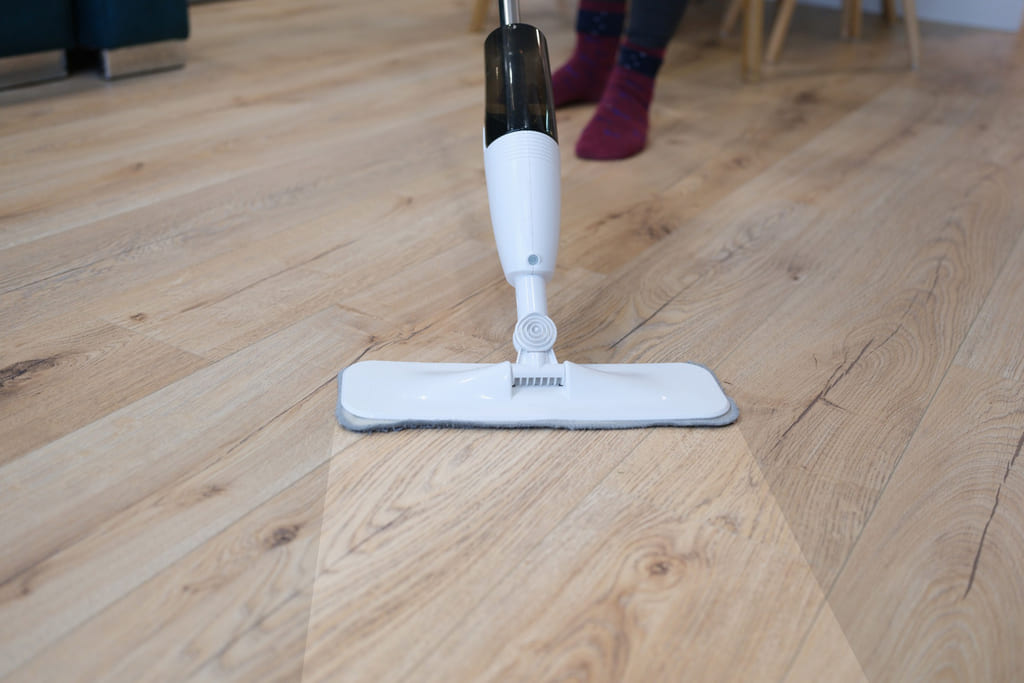
- Use a lightly dampened mop, never a wet one.
- Apply a specific cleaner or warm water with a few drops of neutral product.
- Ventilate well so it dries quickly.
Frequent, gentle cleaning is always better than occasional aggressive cleaning.
How to avoid damaging a floating floor
Much of the wear can be prevented before you even clean:
- Put a doormat at every entrance, including those from the terrace and balcony: the sand brought in on shoes is what scratches most.
- Fit felt pads to the legs of chairs, tables and furniture that gets moved often.
- In rooms with lots of direct sun, use curtains or blinds: light fades the surface over the years.
- Dust daily with a microfibre mop or vacuum cleaner, in the direction of the boards so dust does not settle in the joints.
- Use the dose of product the manufacturer specifies: too much leaves a sticky film that traps dirt.
- If you spill a liquid, dry it up at once.
Minor repairs: when to act
Superficial scratches can be disguised with filler waxes or repair kits in the colour of the floor. If a board lifts, swells or opens at the joints, have it checked soon: it is almost always water that has got in through the joins and, the longer it is left, the more boards it affects. In how to repair a water-damaged floating floor we explain what to do in each case.
What about parquet? Important differences
Although they are often confused, parquet and floating floors are not cleaned the same way. Natural parquet can take treatments such as specific oils or varnishes, but always with care and depending on the finish.
If in doubt, it is best to ask before applying any product. We explain it in how to clean and look after parquet.
common mistakes we see in customers' homes
- Using too much water
- Polishing every week
- Mixing products
- Following generic advice without taking the type of floor into account
These mistakes significantly shorten the life of the floor.
Need advice on looking after your floor?
If you are not sure which product to use or you notice your floor has lost its shine, at Payresa we can advise you and help you keep your floating floor in perfect condition.
Talk to our team in Malaga, with no obligation