
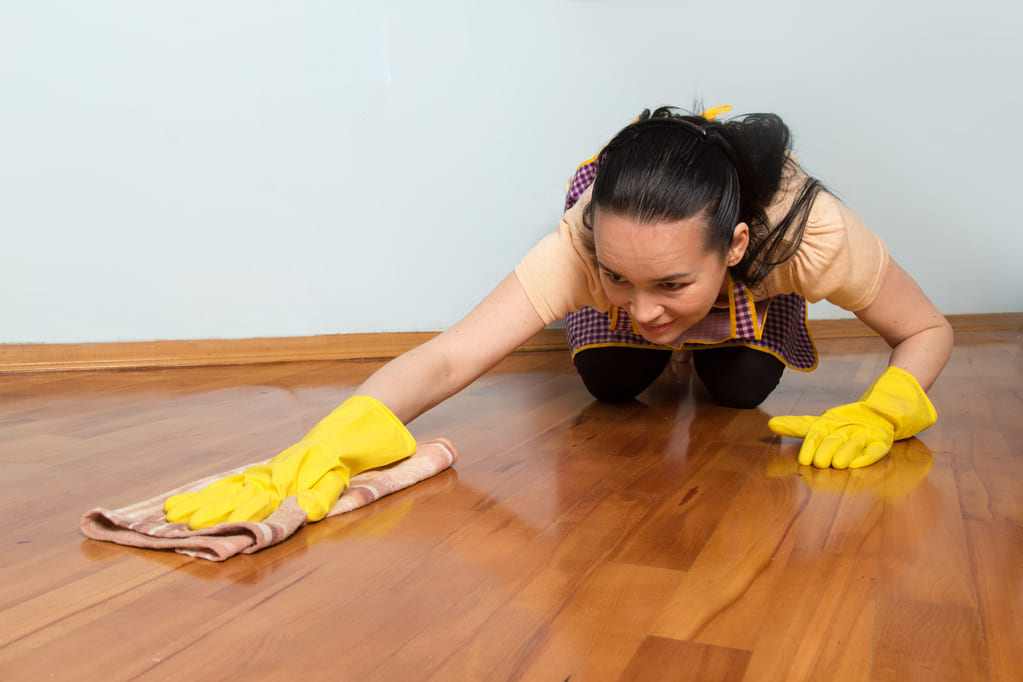
Parquet is a common floor in homes because it creates a warm, welcoming atmosphere. However, looking after these floors takes more attention than other types of flooring. That is why, in this Payresa article, you can learn how to clean parquet, from specialists in flooring in Malaga and carpets.
Things to bear in mind
Before explaining how to clean parquet, it is important to consider a few things that can affect its condition in the long term.
- Scratches need to be avoided; they can be caused by dragging furniture, pets or high-heeled shoes.
- It is important to protect parquet from direct sunlight, as this can cause discolouration and drying out, which in turn can lead to cracks in the wood.
- It is important to avoid abrasive cleaning products, as these can harm parquet.
How to clean parquet
Below are several recommendations on how to clean parquet:
- If you want to remove the dust that builds up in your home, the best option is a vacuum cleaner or a dust mop. A vacuum cleaner is quicker, but bear in mind that if it is not handled gently, the constant rubbing can damage parts of the floor.
- To remove the everyday marks that can build up on the floor, even if they are not visible to the naked eye, we recommend a good-quality mop, well wrung out, with a little soapy product (without overdoing it). Doing this once a week gives the best results.
- If clean water has not been used when cleaning the floor, dirt may build up in the gaps between the boards. To clean them, we recommend a brush or a cloth dampened with alcohol and a little patience to remove the built-up dirt.
- For stubborn grease or paint stains on the floor, you can apply a little alcohol directly to the stain. For more superficial marks, it is important to remove them to avoid damage to the floor. To do so, spray on a little soap and move the mop gently over the stain.
- Another option for keeping floors clean and gleaming is an electric mop, although it can be a more expensive choice. Electric mops are usually very effective at cleaning floors, as they combine different functions such as vacuuming and steam cleaning.
Spills and stains
- Dry any liquid straight away with kitchen paper: water starts to get into the joints in a short time. If it has got in, a hairdryer held at a distance and without too much heat helps draw it out.
- Juice, milk or soft drinks: a damp cloth with a mild parquet detergent, before it dries.
- Do not use vinegar, lemon, bleach or ammonia: acids and harsh products attack the varnish and the wood.
- Test any product other than your usual one on an area that cannot be seen first.
Humidity and temperature: the balance wood needs
Parquet is natural wood and exchanges moisture with the air. With high humidity it swells and can lift; with very dry air (air conditioning in summer, heating in winter) it shrinks and opens up joints or small cracks. Check the relative humidity and temperature range recommended in your floor manufacturer's data sheet and try to keep your home within it.
- Ventilate often in new builds and in homes that are closed up for long periods.
- A hygrometer tells you the humidity in your home; if it goes outside the range, a dehumidifier or humidifier helps correct it.
- Avoid direct sun on the floor for many hours: it darkens and dries out the wood.
- If the parquet lifts without any water having been spilt, look for a leak: pipes, washing machine, fridge or dishwasher.
How often should parquet be renewed?
Unlike laminate, wood parquet can be sanded and revarnished, leaving it looking freshly installed. When to do it depends on use: in high-traffic areas the wear shows sooner. If you leave it too long, it has to be sanded more deeply. We explain this in how much parquet sanding costs and in alternatives to sanding.
How to repair parquet lifted by water
When parquet boards lift, it is important to find out why. In general, there are two main reasons: water building up due to incorrect cleaning, and damp problems in the subfloor.
If the problem is due to water build-up and the boards are not damaged, it can be fixed easily. However, if the boards are damaged, it is advisable to take them to a timber workshop to be sanded properly or to buy new boards.
Once the boards have been fitted, we recommend applying a coat of varnish or lacquer following the manufacturer's instructions to prevent future problems with parquet lifted by water. If the damp persists, it is advisable to seek help from a professional such as Payresa, parquet specialists in Malaga.