
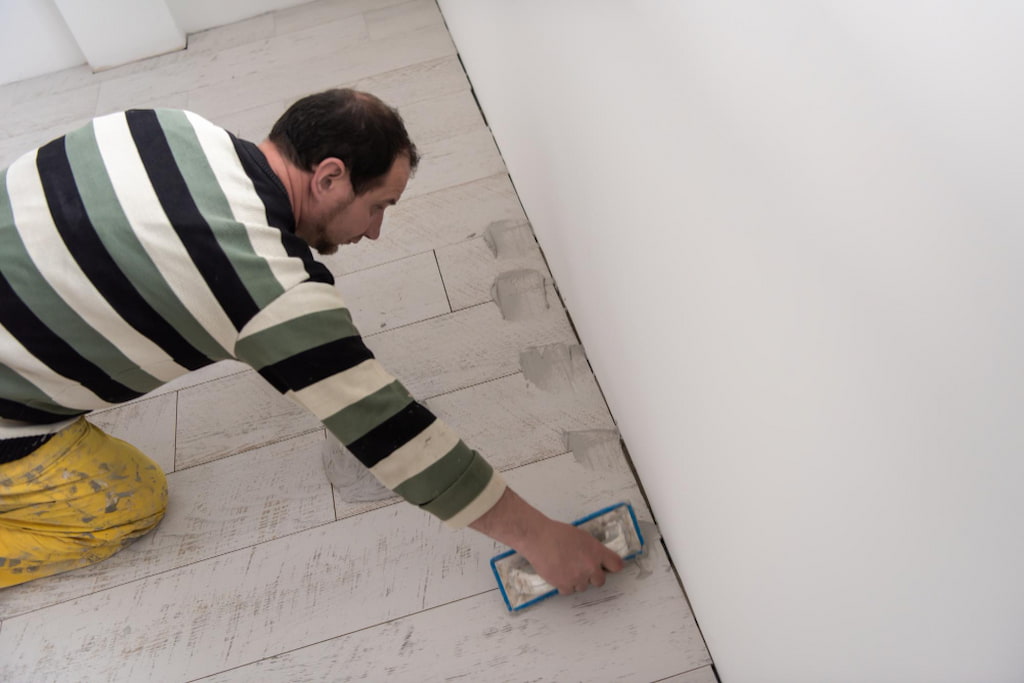
Short answer: you can renew parquet without sanding when the damage is only in the varnish: loss of shine, fine scratches or dull walkways. If the varnish has worn through to the wood (grey or rough patches), there are dark water stains or loose blocks, there is no real alternative to sanding or repairing those pieces.
This guide is for natural wood parquet and floorboards. Laminate can't be sanded: if a plank is damaged, it is replaced.
First things first: what's wrong with your parquet
| Condition of the floor | Solution without sanding | Does it need sanding? |
|---|---|---|
| It has lost its shine and looks dull | Deep clean and a renovating product of the same type as the finish | No |
| Fine scratches that don't reach the wood | Varnish recoat: very light sanding of the varnish layer and a fresh coat | No |
| Occasional dents or scratches | Filler waxes or wood-coloured touch-up pens | No |
| Grey or rough walkways: the varnish no longer protects | — | Yes, at least in those rooms |
| Dark water stains, loose or lifting blocks | — | Repair or replace the pieces and sand |
The finish also matters. Varnished parquet is renewed with varnish; oiled parquet, with oil. Mixing them causes problems: wax or oil on a varnished floor stops new varnish from bonding later and means it has to be sanded back more deeply.
Why avoid sanding when it isn't needed
Sanding takes off the surface layer of the wood until it is clean, and the floor is then varnished in several coats. It restores the parquet to its original condition, but:
- The rooms have to be emptied.
- After varnishing you have to wait 24–48 hours before walking on it.
- Every sanding removes wood thickness. Solid parquet can take many; engineered wood floorboards with a thin top layer can take only a few, depending on the thickness of that layer.
That is why, if the damage is only superficial, one of the alternatives is worth it.
The alternatives to sanding, one by one
1. Varnish recoat (without reaching the wood)
This is the most effective professional alternative for varnished parquet that has lost its shine or has fine scratches. The floor is cleaned, only the varnish layer is sanded very lightly so the new coat bonds, and a coat of varnish compatible with the existing one is applied.
Applying varnish straight over the old one, without that light sanding and without cleaning properly, is the most common mistake: the new varnish doesn't bond and ends up peeling.
2. Maintenance oil (oiled parquet only)
Oiled floors are renewed with a maintenance oil of the same type, applied section by section with a cloth or mop, wiping off the excess. It leaves a natural matt finish. It isn't suitable for varnished parquet.
3. Repair kits for localised damage
For localised dents and scratches there are filler waxes, touch-up pens and wood-coloured fillers. The area is cleaned, the scratch is filled and the excess is wiped off with a cloth. It is a simple, inexpensive solution, but only for small damage.
4. Replacing loose or damaged blocks
If the damage is concentrated in a few pieces, they can be replaced with others of the same wood. The drawback is that the new piece won't be the same shade as those around it, and matching them usually means sanding the whole room.
Advantages and limits of repairing parquet without sanding
- Advantages: cheaper and quicker, no need to empty the house, less dust and no loss of wood thickness.
- Limits: it doesn't remove deep damage, bare patches without varnish or water stains, and some products have to be reapplied from time to time.
If you are not sure what state your floor is in, we explain it in how to tell if it's time to renew your parquet.
How to make the renovation last
- Clean with products designed for your parquet's finish and a well-wrung mop. We go into detail in how to clean parquet.
- Put felt pads on furniture legs and doormats at the entrances.
- Use rugs in the busiest areas.
- Avoid dragging heavy objects.
Frequently asked questions
Can you varnish parquet without sanding?
Yes, if the current varnish is in good condition: it is cleaned, the varnish layer is sanded very lightly and a fresh compatible coat is applied. If the varnish has worn through to the wood, it needs sanding.
How long do you have to wait before walking on it after varnishing?
Between 24 and 48 hours after varnishing, depending on the product.
Can a floating floor be sanded?
A laminate floating floor, no. A wooden floating floor, yes, depending on the thickness of its natural wood top layer; the manufacturer will specify this.
At Payresa we install, sand and varnish wood parquet in Malaga and the province. If you would like us to assess your floor, ask us for a no-obligation quote.