
Table of contents
Materials needed to lay a floating floor over tilesHow to lay a floating floor over tiles step by stepPrepare the floorInsulate the floorLay the boardsFit the skirting boardsFinishingFind out how to lay a floating floor over tiles quickly, hassle-free and with no building work ✅. 【Easy tips】.
The floor is one of the most important features of any home, shop or office. Replacing an old one with a new one can completely transform the look of a space… but sometimes we avoid doing it simply to steer clear of complicated building work.
Here's the good news: there are a number of floors that need no prior preparation and can be laid over the old one without removing it. That is the case with materials such as vinyl flooring or linoleum.
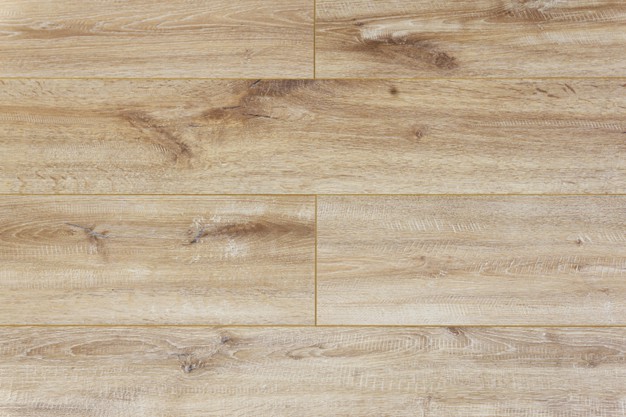
The most popular choice, without a doubt, is laminate (also known as floating flooring). That is why today we explain step by step how to lay a floating floor over tiles with no complications at all. Let's get to work!
Materials needed to lay a floating floor over tiles
Grab a pen and paper to note down everything we are going to need:
- A tape measure.
- A hammer.
- A pull bar for floorboards.
- Jigsaw.
- Underlay.
- Adhesive tape.
- Construction adhesive.
- Skirting boards.
- Floating floorboards.
How to lay a floating floor over tiles step by step
Prepare the floor
One of the great advantages of laminate flooring is that, as well as over tiles, it can be laid over any other type of floor: stone, concrete, ceramic…
It will not need any preparation beyond checking that it is level (if not, we will need to use levelling compound to even it out), clean and dry.
Insulate the floor
We will start by covering the floor with a layer of polyethylene foam, which acts as insulation against both damp and noise. We will let it run about 10 centimetres up the walls at the edges.
We will seal the strips of underlay to one another with adhesive tape.
Lay the boards
The next step is to actually lay the floating floor over the tiles. To do this, we will start by placing the first board. Using a spacer wedge, we will leave a gap of about 15 millimetres from the wall.
It is very important to respect the expansion gaps at all times, as indicated on the floorboard packaging. These gaps can later be covered with trims.
Using the jigsaw and taking measurements, we will cut the boards to the exact length.
If the boards have a click system, you only need to join them together, with no adhesive required.
Otherwise, we will apply white wood glue to the groove of the previous board to fit the new one, and tap it with a hammer to secure it (protecting the board with a wooden block). Any excess glue should be wiped off immediately with a cloth.
The installation should be done row by row. Once we finish one, we move on to the next until the whole space is covered. It is important to make sure that the joints of two adjacent rows do not line up.
Fit the skirting boards
Once all the boards are laid, we need to fit the skirting boards. To do this, we will remove the wedges we placed against the wall earlier to mark the gap.
We will apply construction adhesive to the back of the skirting board and fix it in place.
Finishing
And we reach the last step in laying our floating floor over tiles. We need to clean to remove any dust and debris left behind, and then apply a specific care product.
Now that you know how to lay a floating floor over tiles and have seen how simple it is, why not give it a go? If you are looking for a floating floor company in Malaga offering affordable, stylish, hard-wearing and easy-to-install boards… at Payresa we have what you are looking for! Browse our website and ask us for a no-obligation quote.