
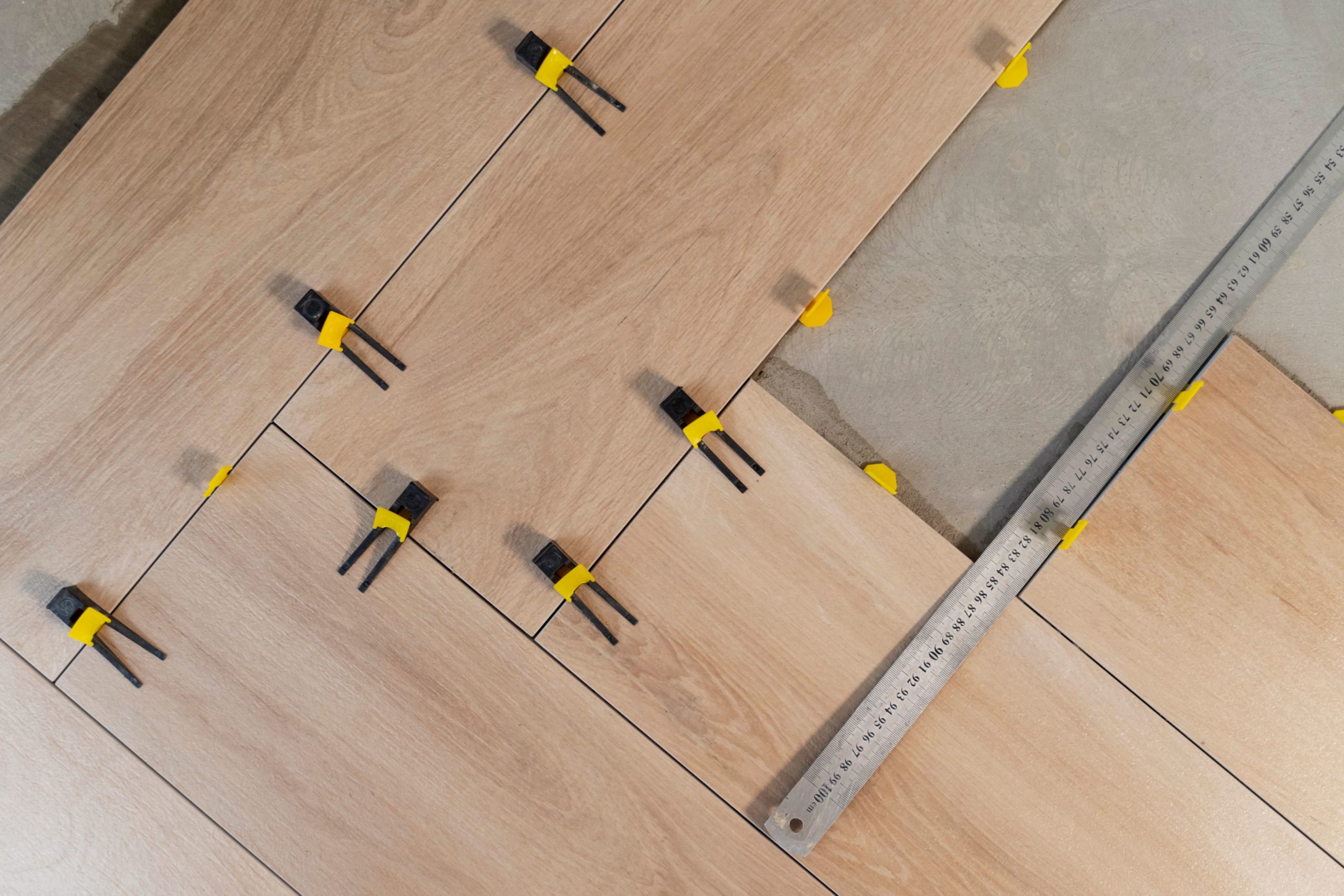
Short answer: for a home, AC4 is designed for heavy domestic use and is usually enough, even with children and pets. AC5 is for heavy commercial use: offices, commercial premises or rental flats with a lot of foot traffic. Paying more for AC5 at home only makes sense in very hard-wearing areas.
What the AC class measures
The AC class indicates the abrasion resistance of the top layer of laminate flooring, in other words, how long it takes to wear down through friction. It is defined by the European standard UNE-EN 13329 using the Taber test: an abrasive wheel spins on the surface and the number of revolutions it withstands before the pattern shows wear is counted.
| Class | Abrasion (Taber test) | Typical use class | Where it fits |
|---|---|---|---|
| AC4 | Minimum 4,000 revolutions | 32 (moderate commercial) | The whole home, including hallways and high-traffic areas |
| AC5 | Minimum 6,000 revolutions | 33 (heavy commercial) | Offices, shops, restaurants, rental flats with a lot of foot traffic |
The standard goes up to AC5. Some manufacturers advertise "AC6" models, but that class does not exist in the standard: it is their own commercial name.
What the AC class doesn't tell you
The AC class only measures wear from friction. An AC5 laminate is not automatically "better" than an AC4 in every respect. Other factors matter just as much, or more, to the end result:
- Water resistance: this depends on the core and the joints, not the AC class. In kitchens and toilets, it matters more that the floor belongs to a water-resistant range.
- Thickness and click system: these affect stability and how the floor sounds underfoot.
- Underlay: a good laminate on a poor underlay sounds hollow (see the best underlay for laminate flooring).
- Quality of the pattern: how many different planks the model has and whether the texture matches the grain.
- Installation: expansion gaps around the perimeter and a profile at every doorway, as manufacturers require.
When to choose AC4 and when to choose AC5
AC4: the option for almost every home
- Living rooms, bedrooms, hallways and kitchens in an everyday home.
- Homes with children and pets.
- It is usually cheaper than AC5 from the same manufacturer, with the same variety of designs.
AC5: when the traffic is commercial
- Offices, shops, restaurants and commercial premises.
- Holiday rental flats or flats with a high turnover of occupants.
- Very hard-wearing areas of the home, such as an entrance from the garden where sand gets tracked in.
In most homes, the difference between AC4 and AC5 is less noticeable than the difference between good and poor maintenance: a doormat at the entrances, felt pads on the furniture and a well-wrung mop (we explain this in how to clean laminate flooring).
How to find out a laminate's AC class
It is shown on the technical data sheet and the packaging, usually next to the use class (for example, "AC4 / 32"). If a shop can't tell you the AC class of a model, ask for the manufacturer's technical data sheet.
At our showroom at C/ Tucídides, 44 (Malaga) you can see and touch laminates from Pergo, for which we are the exclusive distributor in Malaga, ask for the technical data sheet of each model and see how a Pergo laminate we laid 25 years ago has aged.
Frequently asked questions
Which is better, AC4 or AC5 laminate?
For a home, AC4 is usually enough. AC5 is more resistant to wear from friction and is worth it in commercial premises, offices or flats with a lot of foot traffic.
Is AC5 laminate more water-resistant?
Not necessarily. The AC class measures wear from friction; water resistance depends on the core and joints of each range. If water is a concern, also compare it with vinyl in laminate or vinyl flooring.
Does AC6 laminate exist?
The UNE-EN 13329 standard only goes up to AC5. "AC6" is a commercial name used by some manufacturers.
If you want to learn about all the types of laminate, we explain them in what types of wood laminate flooring are there.